12 April 2013

The Gas Bubble

Market bubbles come and go, but they all have things in common: a few people get rich, a lot of people get taken, and a mess is left for the taxpayers to clean up. To understand the hydro-fracking bubble, there are some things one must know: each well only produces a little gas (and exhausts relatively quickly), reserves were significantly overstated at the beginning of the game, and most important: Wall Street is very invested and wants its money out.

The devastating environmental effects of the process are well documented, and not the subject of this essay (water depletion, water pollution, habitat and farmland destruction, and significant climate change impacts).
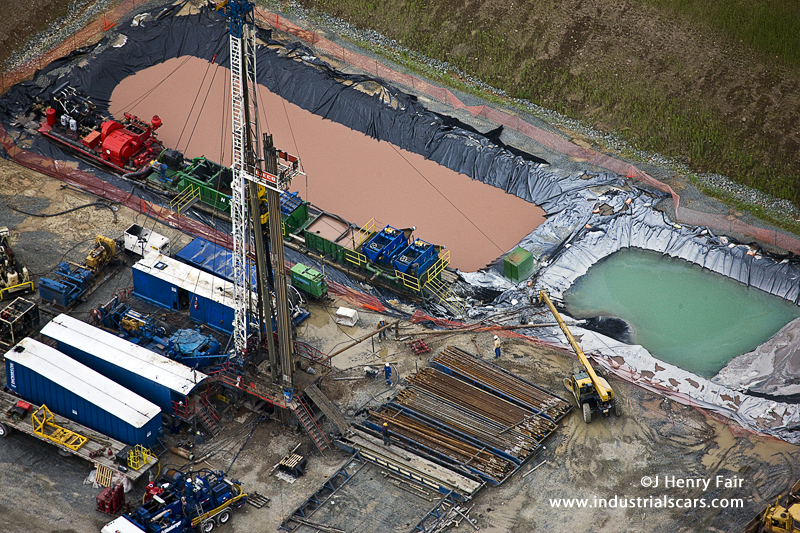
2013-04-05-3613088_JHFair.jpgHydro-fracking drill sites during drilling process with drilling slurry containment pond

The process of fracturing rock to create a cavity in a thin layer of shale, deep under ground, to extract the gas trapped in cells there does not create a large pocket. So, only a small amount of gas is produced, and the well is exhausted quickly. Given the low volume of gas produced by a single well, sustained supply depends on the production of many, many wells, which means many leases must be signed with landowners. As the gas rush caught on, there was a big push by gas drillers to sign as many leases as possible, as these "reserves" increased the company's value, and thus its stock price. When those leases began to come due, they had to be exercised, or else they would expire, thus increasing the market glut.

In any resource extraction rush, the easily obtained reserves are the first to be taken, and as they dwindle, more difficult and expensive assets are pursued until such time as extraction cost plus profit exceeds market cost, at which point extraction ceases.
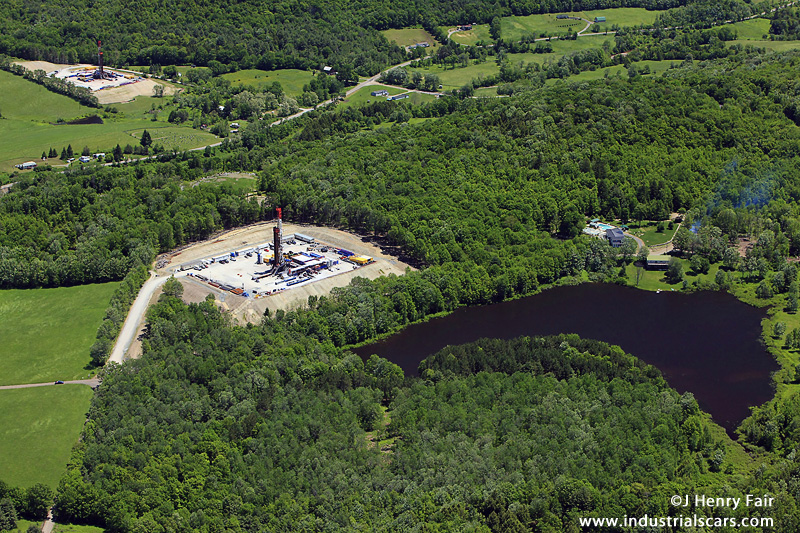
2013-04-05-3914748_JHFair.jpgHydro-fracking site with drill rig next to pond, cut out of forest

The Energy Information Agency has predicted that the USA will shift much its energy production to natural gas in the coming years, based on the imagined plentiful supply, and clean combustion characteristics of this fuel. With the sudden oversupply brought on by the hydro-fracking rush, the price of natural gas has plummeted with numerous consequences. Most alarmingly, the bottom has dropped from the sustainable energy markets, as gas has became cheaper than wind or solar, which have already become competitive with oil and coal. Given the low price, and the EIA predictions of plenty in the future, many industries have placed significant investments on gas-fueled technologies. Last year, the USGS significantly lowered its estimate of recoverable gas in the East Coast shale deposits to at least one twentieth of their previous estimates, upon which the gas bubble was based. But as the money was already invested, there is little discussion of this.

The oversupply of gas in the USA has driven domestic prices to about a fifth of the worldwide average, a situation that can only be temporary. Last week, a pump on a gas pipeline supplying Britain from the continent failed, causing a 50% spike in wholesale gas prices. Though it was not revealed at the time, Britain, suffering an unusually cold winter, was down to a two day supply of gas. This week it was announced that a US gas company had signed a contract to supply hydro-fracked gas to Britain, starting in 2018, in the form of liquid natural gas, via tankers loaded in Louisiana.
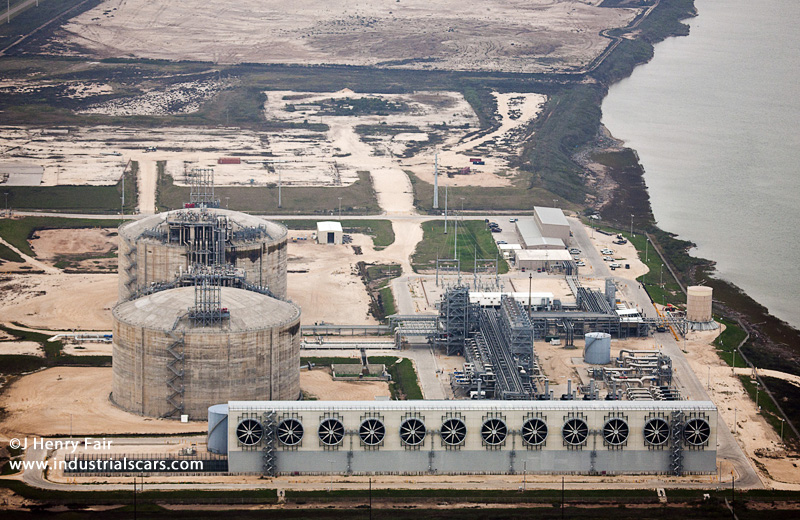
2013-04-05-4022451_JHFair.jpgLiquid natural gas compression terminal
The Keystone XL pipeline, proposed to carry heavy crude oil from northern Alberta to refineries in Texas, figures into this equation as well. Canada was formerly the largest supplier of natural gas to the USA, but the tar sands operations consume a tremendous amount of natural gas in the processing of that dirty crude, thus eliminating that supply.
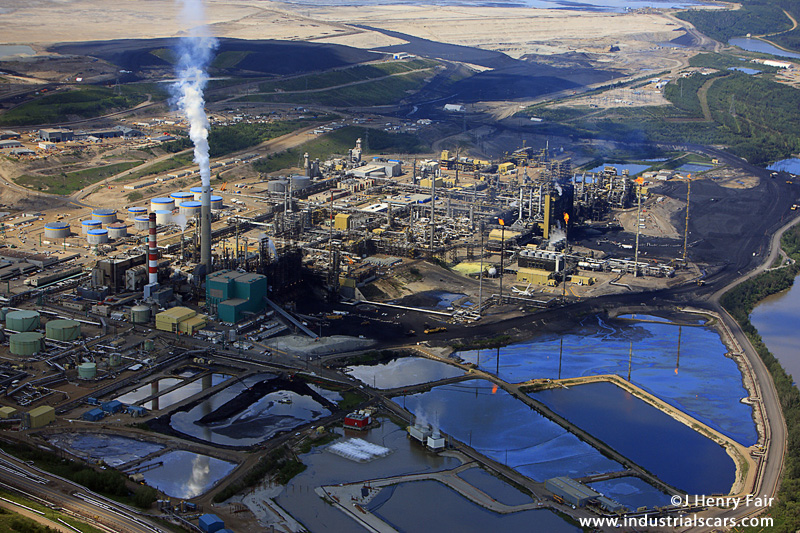
2013-04-05-3632411_JHFair.jpgOil sands upgrader in Alberta

In the last few years, the EPA has finally enacted air quality regulations that will force electricity utilities to either retire or upgrade the most dangerous coal fired power plants. Many of these utilities, taking into account the projections of future gas supplies, and current USA market price of gas, are converting their electricity production to natural gas. In 2000, the USA produced 51% of its electricity with coal, and 16% with gas; in 2010 the ratio was 44.5% and 24.1%, and the trend continues.
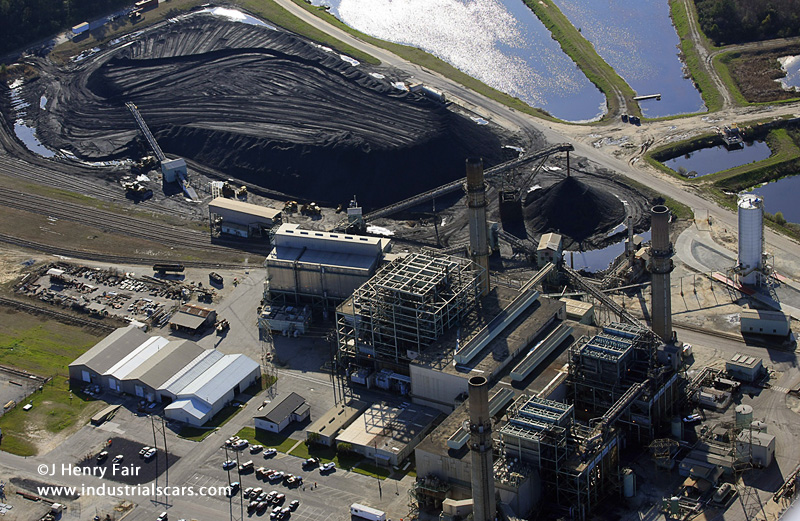
2013-04-05-3596547_JHFair.jpgCoal fired power plant in SC, soon to be retired

So let's add up all of these facts and draw a few conclusions:
-tremendously overstated supplies
-an overstatement upon which bankers make large investments
-increasingly expensive and difficult reserves remain for extraction
-commitments in place to sell gas overseas in markets with higher prices
-numerous domestic industries (especially electric utilities) implementing technologies to utilize the erroneously projected plentiful, cheap gas supplies
-coal powered electrical generation converted to natural gas to avoid the expense of adding pollution controls
-Wall Street wants its money back before the bubble bursts, so the pressure is on the gas companies to keep drilling wells and producing gas to pay the interest on the loans.

So where will that leave us, the average citizens in the USA?
The first thing that will affect all of us will be a tremendous spike in electricity prices in the next few years as US natural gas prices equalize with world market prices, which will have risen from current levels due to the voracious demand of Europe, Asia, the tar sands, and diminishing world supplies. More importantly, we will be faced with depleted and polluted groundwater, and tremendously degraded farmland here at home as we rushed to keep the bubble inflated.
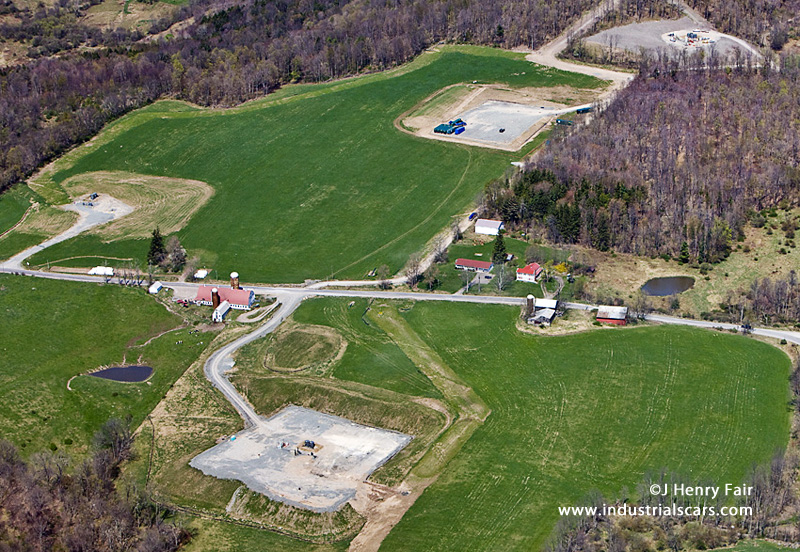
2013-04-05-3803099_JHFair.jpgFarm with four completed hydro-fracking well pads

22 February 2013

Texas Coast

Texas is certainly one of the most enigmatic states in the USA, with a contradiction jumping up immediately for most any assertion. The petrochemical industry calls Houston its home, and bestows upon it many gifts and afflictions from fine museums and wealth to poverty and pollution.
Though I have photographed the Houston harbor petrochemical complex several times, there is much else to see along the coast which has eluded me. Southwings pilot, Tom Hutchings, evinced a similar interest and volunteered to make the trek down south along the coast to Mexico.

I booked a ticket to fly to Houston and meet him, but then the weather man spoke badly about the coming days. This is always the tough gamble: bet on the prediction and change all of the schedules, or go when it's the most convenient. This time I chose the former, changed my ticket, and as always the front rolled through a day after the man predicted. Generally a storm front is followed by clear weather, which is ideal for shooting, though often also a bumpy ride–not to be attempted by the weak of stomach. But it didn't work that way this time; the front was weak and came through late, so we did not have that bluebird day or two. When you throw dice with God, you take what you get and be glad you got out of the game at all, so off we went.

Our goals were grand, so we decided to do it in two days: Houston Harbor to Galveston and south to Freeport the first day, picking it up there the next day (after waiting out the weather) and going down to Corpus Christi, then even further south to the Mexican Border (had to indulge the pilot's whim on that). The Houston Harbor is fascinating (for those who are fascinated by the infrastructure that drives our world (40% of the refining capacity in the USA is along the Gulf of Mexico coast, and much of the petrochemical industry)). In the Harbor itself we photographed a few sites for environmental groups that were pursuing lawsuits, and otherwise pursued the current directions of the Industrial Scars project, which is recently tending to more mechanical abstracts than the fluid dynamics of the last show. Tom later told me, as this was the day before the front blew through, that the air was so thick that it was like a magic carpet ride to fly the plane, and of course I felt it as well.


Tom and I have flown together many times, and it's always a three-way contest of wills on these missions: him versus me, with the air traffic controllers trumping both. After looking at the BP refinery in Texas City, the site of so many disasters, we moved to Galveston, where I spotted several cruise ships docked in the bay. These things are tremendous environmental pigs, not to mention sociological fascinations, so I requested a flyover. Tom averred that there was nothing interesting there, and we were moving on, an outcome I was not about to accept. We started our collaboration on the BP Deepwater disaster, and our relationship is similar to that of combat veterans. I spotted a drill rig across the bay in the Haliburton dry docks and said, "Oh look, isn't that the Q4000 over there in drydock?" (the rig that did all the heavy lifting at the BP Deepwater site), and of course he could not help but fly-over to have a look, which took us right over the cruise ships, and they were as interesting as I has suspected. The rig in drydock was The Uncle John, a deepwater pipe-laying machine.

Over the coastline, we were immediately struck by the tremendous amount of construction right to the water's edge, and a six foot sea wall "protecting" Galveston City proper. Having just come through Hurricane Sandy, where so much coastal construction was destroyed, the topic of building near the water looms large in the national dialog. As we face the specter of ocean rise, wise planning would dictate a significant setback from the water. And in this era of budget constraints, taxpayer financed flood insurance is nothing short of a boondoggle. The houses along this coast are an invitation to the next hurricane, and one amusement park in particular reminded me of nothing if not a ball teed up to be swatted away.

Further southwest, we ventured to Freeport, home of one of the most poisonous chemical/plastics plants in the country, making nice things that insulate your house and surround you every day. Ironically, some of the most toxic things are the least photogenic, so aside from a few shots for documentation, we have not much to show. One other interesting thing in Freeport confronted us: two giant tanks connected by a complex pattern of pipes to a large array of fans. We flew around and around trying to ascertain the nature of the beast until it hit me: a compressor station for liquefying natural gas. Oh, the works of man. Thus ended the first day.

02 January 2013

Vegetarian in Berlin

I've been around the world, but never to a restaurant with the entrance in an industrial loading dock. You really must look to find Cookies Cream in Berlin, but it's worth it.

There is no sign on the street, and one must walk back into an alley by the Comic Opera Berlin. Just when you think Mackie Messer is about to jump out and do something rash to your person, you spot a large antique chandelier hanging in the loading dock, the incongruity of which give a bit of hope. An unmarked steel door with a buzzer allows you entrance, at which point the decor resembles a downtown NYC club.

This is a fine vegetarian restaurant, really nice helpful staff, and great food. We had, for appetizers: the pumpkin soup (out of this world), Mozzarella di Bufala with figs and toasted walnuts (quite good, though once you have had the real thing in Italy, everything else is just a reminder of what could be). Main course was Parmesan potatoes filled with peppers and goat cheese (fine) and kohlrabi with beluga lentils (hmmm good)
We opted for the cookies and cream for desert (vanilla ice cream with chocolate cookies with bits of olive (quite good).

Coming from the USA, where plates are gigantic, the tendency to smaller portions at first site leaves one disappointed, but you don't go away hungry, and it's certainly much healthier to eat less.

I highly recommend this place, and will return.

10 September 2012

Eulogy

Some people are too important to die. The effort they make inspires too many, the work they do has too large an impact, and their selflessness and generosity propel so many others to great efforts. One cannot imagine that they are mortal.

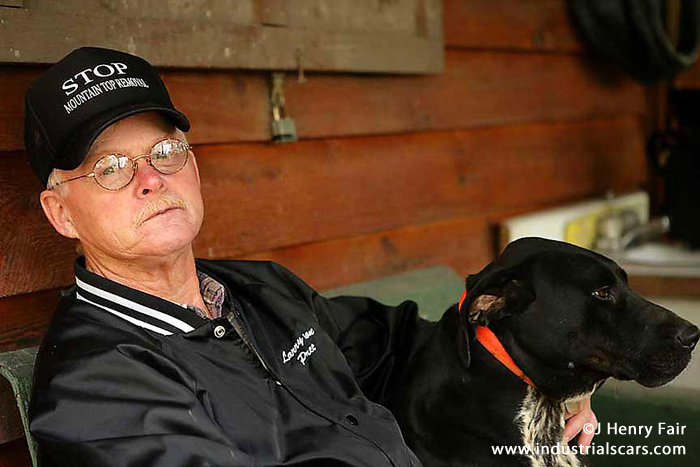
Though short in stature, Larry Gibson was a giant of a man. In life, he did more to fight mountaintop removal mining (MTR, one of the great environmental injustices of our day) than any other person. His tireless campaigning and constant willingness to guide journalists, activists, and concerned citizens through the scenes of this nightmare were both an inspiration and an invaluable component of the effort to stop this crime.

Wanting to photograph MTR, I called Larry on recommendation from a friend, and he opened his home, his calendar, and his heart to me. I went to his place, adjacent to one of the largest MTR sites, numerous times, and Larry always had time to feed, house, and guide me.


One of the large coal mining companies had acquired the land around Larry and destroyed it, then used every possible method to take his. They killed his dogs, they sent bullies to intimidate him, they broke up his parties, and those are only the stories he shared with me. But, Larry was not a man to be intimidated.

The world is a smaller place now that Larry will not answer the phone with that thick West Virginia accent. But he still lives with all of us who loved and were inspired by him.


14 August 2012

ThumbCare

While the debate about "Obamacare" rages, with the doomsayers claiming national fiscal ruin, and the proponents touting the GAO's projected savings, I will throw a couple of personal pennies into the fray.
Recently, in Germany, i had a small infection on my thumb, which i ignored till the pain prevented me from retrieving coins from the pocket. A friend made an appointment with a doctor she knew, elaborating that i was in a hurry, and could i run in the next day and be seen promptly. Contrary to my usual tiresome tardiness, i was more or less on time, and, with a minimum of paperwork, was shown in to a treatment room. Shortly thereafter, the doctor entered, listened to my explanation, prescribed treatment, and walked me out to the desk to sign out.

Time to pay at the doctor is always stressful. Must I give them my firstborn?
They inquired about my insurance, and i embarrassedly told them that I was an American artist, and we lived without those luxuries, praying for health, and dreading the fiscal consequence of illness. They expressed the usual disbelief of the civilized for the unwashed, and asked about the new health care law, to which I replied that the battle was still under way. I assured them I would pay, and, based on my experience with the US healthcare system, expected that I would have to cash in my plane ticket home to cover it. In the most apologetic way they handed me a bill for 38 euros, about $45. In the USA, this would have cost at least $200, and i would never have waltzed in the next day, be seen promptly, and on my way.

So when someone tells you that it doesn't work in countries with universal health care, look at this map of the countries that provide it and note that Amerika is the one "developed" nation that does not. And i can personally attest that Germans live as well or better than us, so don't start with the "it will bankrupt us" line.

Please. Healthcare. Now.

18 July 2012

Dartmouth

We were extremely pleased when Dartmouth's Hood Museum notified us that the student curatorial team had chosen “Arsenic is Grey” as their addition to the permanent collection last year.


The Museum's focus on environmental photography is a pleasure to see in this world of denial. It was also gratifying that they invited me to come speak in conjunction with the exhibit “Looking Back at Earth” for which my image was chosen as the key artwork.

The trek from NYC to Dartmouth is long, and, as I always prefer mass transit, the best option was a bus from the Yale Club, which proved to be a door-to-door pleasure, complete with internet and decent coffee. Hanover, NH has many features of other college towns: a thriving cultural life, good organic and local food (so hard to find elsewhere in the USA), and decent coffee, though the boutique cafe brews each cup singularly using a plastic drip funnel, a horror for a plastiphobe like myself. I spoke first to a Photo 101 class, and as usual in that setting, bounced back and forth between photo-technique and environmental. My query established that there were some climate change deniers in the group, so I did not hammer that sensitive issue too hard (god bless amerika). We live in a land polarized by vitriolic dialog, and a rabid denial of science. The water is rising and storms increasing, yet half of our population clings to the Fox party line that climate change is non-existent (god bless amerika). But God will not save us, only we can do that, but the tipping point comes perilously closer. Once we push up global temperature enough to release that frozen methane in the tundra and ocean floor, game over.

But it's pointless to tell this to someone fed on a diet of Fox disinformation, because, like the Incas that could not see the murderous weapons of the Spaniards, they will not hear it.
So I take pictures. Of the things that are causing cancer and climate change. And I make them disturbingly beautiful, so they create doubt in the minds of the certain. Because dialog has failed in our country, and hard has a magical way of getting around that, of sidestepping the “rationalizing brain.” So just look at the pictures, and I will try to keep my mouth shut. And think about the impact on your grandchildren of that next roll of toilet paper you buy.

After the class there was a well-attended public talk in the auditorium, with lots of questions at the end, which I love. Dartmouth was a wonderful experience, and it's a pleasure to interact with young people that are asking questions with open eyes. I hope they can awaken the rest of us.

13 June 2012

Projekt Senckenberg

As the world becomes ever more virtual, with seemingly any purchase, communication, or information available through the ether, leaving the house seems ever more a tiresome inconvenience. And noone can deny the importance of the web, to the point that lack of a presence there seems anywhere from charmingly anachronistic to downright dangerous. The Senckenberg Museum in Frankfurt is one of the most respected natural history museums in the world, on par with New York’s Museum of Natural History. Their recent symposium “Exhibit Nature, Explain Science” was an examination of the role of traditional museums in the contemporary electronic world with presentations by a range of participants from other nature museums showing cutting-edge exhibits to technology vendors with new tools for dissemination. And me. Ironies abound in our world: everyone loves nature shows on television, but participates (albeit unwittingly) in the destruction of this realm we love. Perfect example: toilet paper. Who would think that paper companies denude old-growth forests to make this product that we flush away several times a day? The lesson? One of the simplest things the individual can do to save wildlife is buy TP made from recycled stock. This is the type of message that goes perfectly in a nature museum. The experience of presenting to such an audience was fantastic, with more to come, we hope. To speak to such a group, talk about one’s project, then get the live feedback, is something that the internet can never do; and thus the importance of live interaction. We are social animals. Nothing can replace the experience of the face-to-face meeting and exchange.